


|
Chilean cuisine is a long and narrow table laid with diverse dishes. It is the country’s geography and history as manifested in the diversity of dishes and drinks. The result of a cultural mix, with ingredients from various culinary traditions, Chilean cuisine is a product of the cultural mix between the powerful indigenous tradition and its encounter with the Spaniards.
Later French cooking emerged, which first had an influence over the elite but then spread to all of society. Currently Chile is a country that is open to international cuisine and there are restaurants with specialties from different countries and the clubs of immigrant communities. At the same time there is a revival of native products from the land and in particular from the sea.
In this way, the new Chilean cuisine creates, reinvents, and experiments for the tastes of all diners. Globalization and the arrival of many foreigners in the country have increased the range of gastronomy and flavors available in Chile. It is common to find Thai, German, and Indian restaurants in Santiago. However, for Chileans, even those who live abroad, the empanada will always evoke the independence holidays and other traditional celebrations.
Of course, it is also an excellent opportunity to enjoy these dishes with a glass of the famous Chilean wine or pisco.
Everybody’s table
All communities from north to south have their typical dishes according to the climate and the fruits of both the land and the sea.
The long table of Chile is set with the most authentic native and ancestral dishes alongside those of the diverse immigrant communities that have contributed to the country’s gastronomical culture. The culinary mix goes beyond the combinations that emerged with contact between native peoples and the Spanish.
There has also been influence from Arab and European, such as French and German, cuisine. Thus a typical national dish like cazuela has distinctive characteristics according to where it is being prepared. The main difference lies with the ingredients. In the north - writes the anthropologist Sonia Montecino - the people are very precise in noting that their cazuela is different from the one prepared in the south, which in turn is totally different from the one in Central Chile. However, what unites these cazuelas is the concept of a stew, a hot soup -of varying thickness- where meats and vegetables float in large chunks without mixing.
Anybody might be surprised by the origins of a given dish. For example, a dish that originates in the north and is eaten throughout the country is cebiche, which comes from the Arabic sibech, meaning sour food. It is prepared with raw fish that is marinated in lemon and served with salt, garlic, and onion. In addition, it can also include chili. It is mainly consumed on the coast and also in Iquique and Arica.
Humitas and mote con huesillo
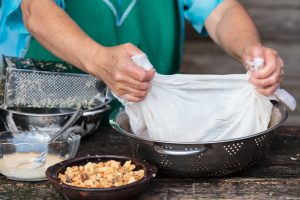
We already know that cazuela is available throughout the country. However, humitas stand out in the central region and are made out of choclo, as fresh sweet corn is called. The choclo is grated into a paste to which you later add a bit of chopped onion. A portion of this is wrapped in the same corn husks and each humita is tied tight in the shape of a butterfly.
They are then boiled in water with salt before draining and serving. They can be accompanied with a tomato salad, though some people prefer them with sugar. Humitas are a mestizo version of the pastel de choclo (corn pie), which is based on the same grated corn plus a piece of chicken and the same ingredients contained in an empanada filling (pino, raisins, olives, egg) and served in a clay dish. Equally or more tempting than humitas is mote con huesillos a refreshing nonalcoholic drink that can be served either as a delicious summer dessert or even from special carts in the street on hot days.
Mote is a word of Quechua and Aymara origin that means boiled wheat. The huesillo is a dried peach that has been boiled and then mixed with the mote. Mote con huesillos is served cold.
In a stone oven
A typical dish with a good consistency in the cold and rainy south is charquicán, which is served hot and gives off a warm and appetizing aroma. It is prepared with meat, onions, potatoes, pumpkin, garlic, and varied herbs and spices, including paprika. The ingredients, chopped very small, are first sautéed and then boiled.
The name comes from charqui, the sun-dried salted meat that was travelers’ main source of nourishment. In the south, especially on the coast, similar stews are prepared using the seaweed cochayuyo instead of meat.
Further south, Chiloé invites us to eat a delicious curanto, which is prepared in a hole in the ground and is called pulmay when prepared in a pot. The name refers to the stone oven that the hole in the ground with hot rocks in it becomes. The stew has seafood, chicken, pork, fish, legumes, pieces of corn, and potato cakes known as milcao and chapalele. All of the ingredients are placed in layers covered by giant leaves that prevent the steam from escaping.
For about an hour the community gathers around this festive meal that is consumed on the spot, beginning with its substantial broth. In a pot the basis is the same as the curanto made in a hole but with fewer ingredients and for home consumption. The origin of the name comes from the Mapuche word kurantu, which means stone of the sun.
|